ASPI's subsidiary forms partnership with Necsa to produce HALEU nuclear fuel


Nasdaq- and JSE-listed advanced materials company ASP Isotopes’ (ASPI’s) nuclear fuel processing subsidiary Quantum Leap Energy (QLE) and the South African Nuclear Energy Corporation (Necsa) have entered into a pre-implementation services contract agreement as part of the planned collaboration on research, development and commercial production of high-assay, low-enriched uranium (HALEU).
This is a critical step towards addressing global nuclear fuel supply needs for next-generation fission reactors.
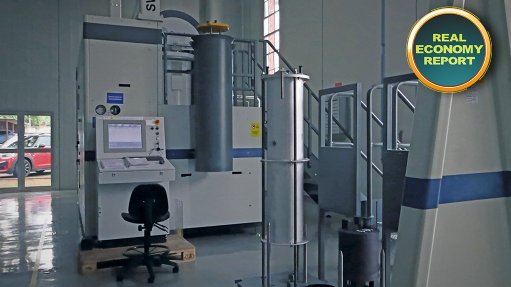
Under the contract, Necsa has agreed to provide QLE's South African subsidiary with certain facilities, infrastructure, utilities and services related to the siting, design, construction, commissioning and operation of an enrichment facility on the Necsa site in Pelindaba, in the North West province.
A joint coordination committee, which will be comprised of two representatives of QLE South Africa and Necsa, has been established to oversee and govern the implementation of the contract.
QLE's objective for the collaboration with Necsa is to achieve market readiness for HALEU production.
Additionally, the collaboration positions QLE to conduct research and development activities for enrichment operations at Necsa's Pelindaba site, which will leverage QLE's in-licensed and proprietary enrichment technology alongside Necsa's established nuclear infrastructure.
The collaboration will be subject to Necsa's prevailing site regulations, safety protocols and security requirements, and applicable National Nuclear Regulator and other regulatory approvals, ASPI says.
This initiative is also in line with Necsa's strategic framework of optimising its nuclear fuel capabilities.
The QLE-Necsa initiative represents an important step toward establishing diverse and reliable HALEU supply chains to support next-generation nuclear energy deployment, ASPI says.
This commercial partnership comes at a critical time as advanced reactor technologies requiring HALEU fuel are being developed globally at an accelerating pace to meet the clean, baseload power demands of AI data centre infrastructure and industrial electrification.
HALEU is a crucial fuel for small, modular reactors and other advanced nuclear reactor designs. The US Department of Energy estimates that, by 2035, the country will need 50 t/y of HALEU to support its commercial nuclear power industry, which escalates to 500 t/y by 2050.
“Gaining access to this internationally-recognised facility is intended to help us to move from planning to implementation, and advance our goal of providing a reliable HALEU supply for next-generation reactors to meet rapidly growing market demand for HALEU nuclear fuel,” says QLE CEO Ryno Pretorius.
“This represents a significant advancement in our commercial partnership with Necsa and its proven infrastructure for the development of nuclear materials,” he says.
Necsa's experience in nuclear technologies and established global distribution networks positions this partnership to make a meaningful contribution to the emerging HALEU market, says Necsa Group CEO Loyiso Tyabashe.
“Necsa intends to optimise global networks of over 60 years and complementary capabilities on enrichment with QLE. Necsa is on a growth and expansion trajectory and appreciates collaboration which opens more avenues for exploration and a broader market reach,” he says.
Further, the contract builds on the previously announced memorandum of understanding between QLE and Necsa, and leverages QLE's enrichment capabilities alongside Necsa's capabilities and strategic positioning in the global nuclear value chain, ASPI says.
Article Enquiry
Email Article
Save Article
Feedback
To advertise email advertising@creamermedia.co.za or click here



Latest News

Showroom
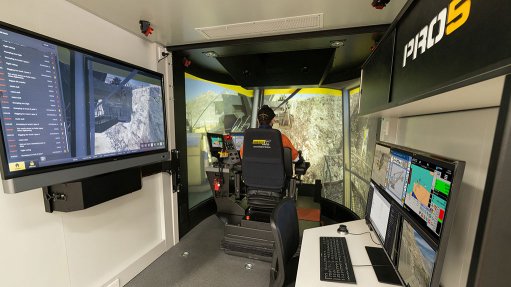
Immersive Technologies is the world's largest, proven and tested supplier of simulator training solutions to the global resources industry.
VISIT SHOWROOM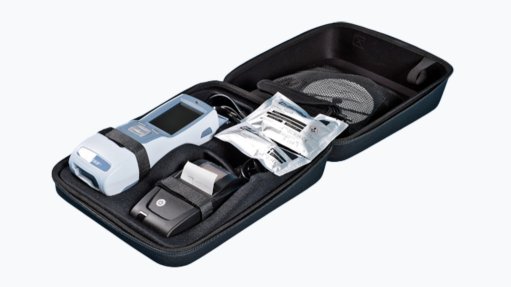
Developed to exceed the latest EN 15964 standards for police breathalysers proving that it will remain accurate and reliable for many years to come.
VISIT SHOWROOM


Press Office
Announcements
What's On
Subscribe to improve your user experience...
Option 1 (equivalent of R125 a month):
Receive a weekly copy of Creamer Media's Engineering News & Mining Weekly magazine
(print copy for those in South Africa and e-magazine for those outside of South Africa)
Receive daily email newsletters
Access to full search results
Access archive of magazine back copies
Access to Projects in Progress
Access to ONE Research Report of your choice in PDF format
Option 2 (equivalent of R375 a month):
All benefits from Option 1
PLUS
Access to Creamer Media's Research Channel Africa for ALL Research Reports, in PDF format, on various industrial and mining sectors
including Electricity; Water; Energy Transition; Hydrogen; Roads, Rail and Ports; Coal; Gold; Platinum; Battery Metals; etc.
Already a subscriber?
Forgotten your password?
Receive weekly copy of Creamer Media's Engineering News & Mining Weekly magazine (print copy for those in South Africa and e-magazine for those outside of South Africa)
➕
Recieve daily email newsletters
➕
Access to full search results
➕
Access archive of magazine back copies
➕
Access to Projects in Progress
➕
Access to ONE Research Report of your choice in PDF format
RESEARCH CHANNEL AFRICA
R4500 (equivalent of R375 a month)
SUBSCRIBEAll benefits from Option 1
➕
Access to Creamer Media's Research Channel Africa for ALL Research Reports on various industrial and mining sectors, in PDF format, including on:
Electricity
➕
Water
➕
Energy Transition
➕
Hydrogen
➕
Roads, Rail and Ports
➕
Coal
➕
Gold
➕
Platinum
➕
Battery Metals
➕
etc.
Receive all benefits from Option 1 or Option 2 delivered to numerous people at your company
➕
Multiple User names and Passwords for simultaneous log-ins
➕
Intranet integration access to all in your organisation